Walks
How to walk two dogs at once without the tangle
Small habits that keep double walks relaxed, from who walks on which side to how you pace the first five minutes.
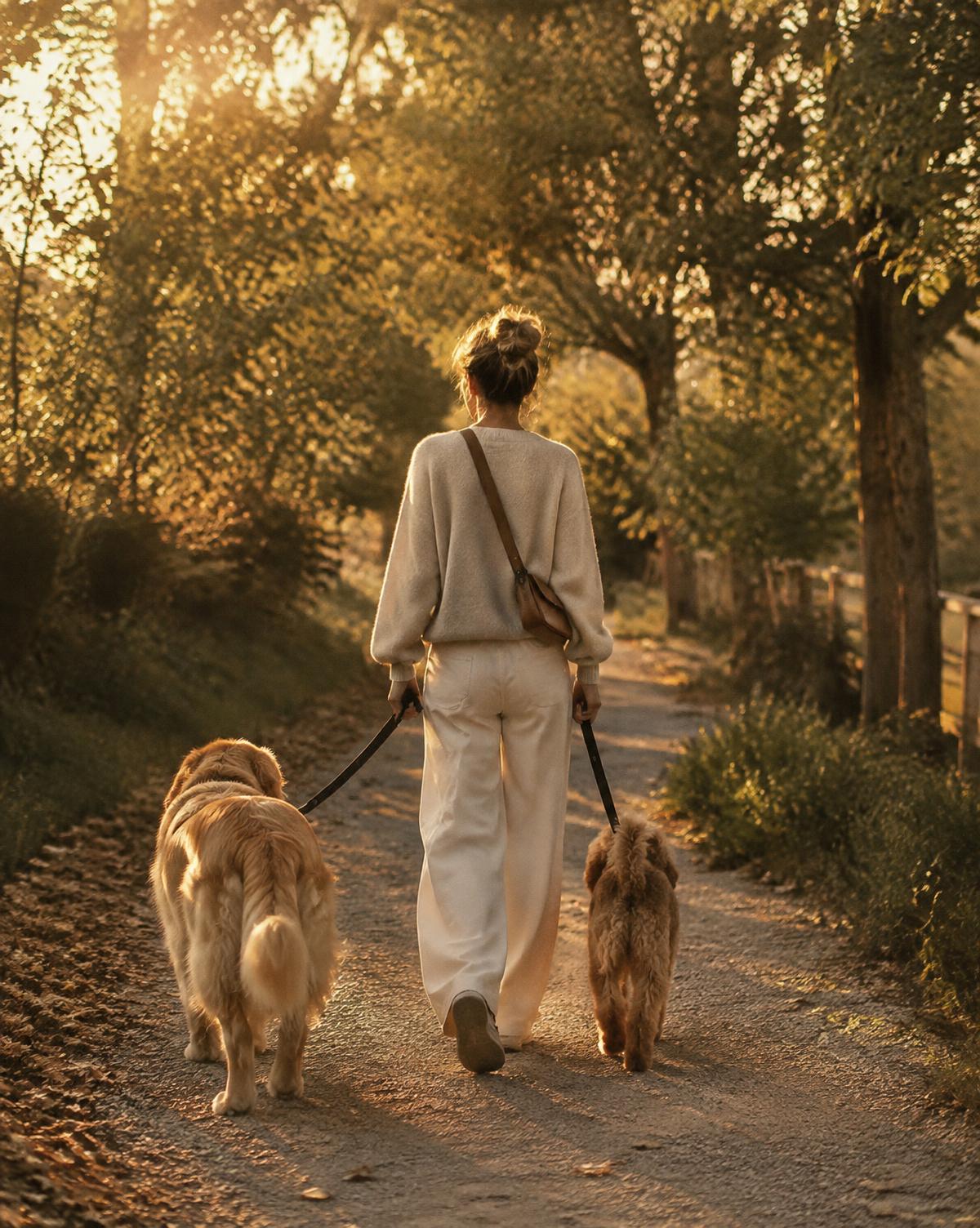
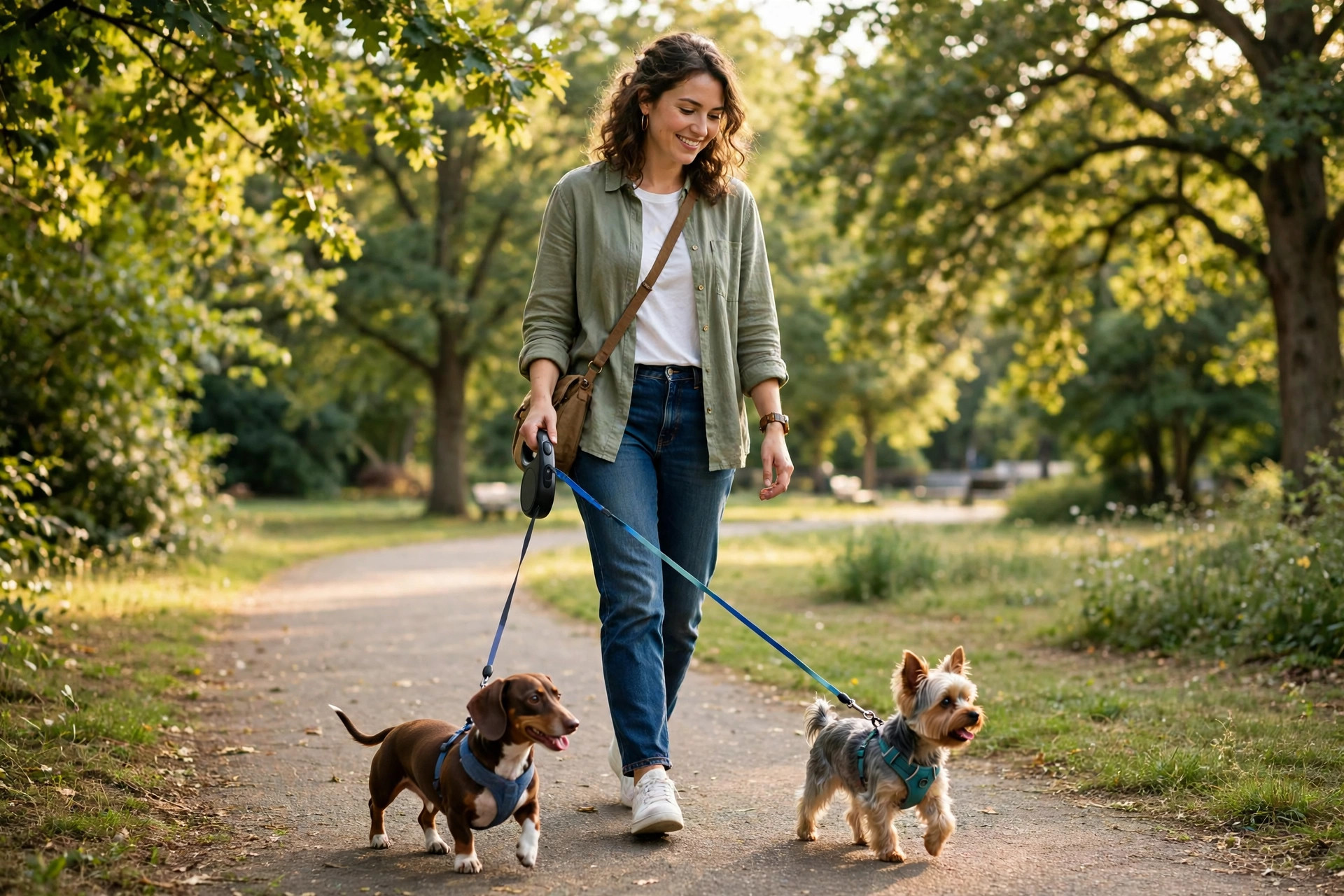
Walking two dogs at once can make a daily outing feel efficient and enjoyable, but it takes more than holding two leads and heading out. Dogs may move at different speeds, react to different things, or compete for the same patch of pavement. With a predictable setup and a little practice, you can make double walks calmer for you and your dogs.
This guide covers practical double dog walking tips, from choosing sides and managing the doorway to handling distractions and building a two-week routine. There is no single setup that suits every pair. Keep walks short enough to stay manageable, adjust to each dog, and seek a qualified trainer or vet when behaviour or health needs call for individual guidance.
Key takeaways
- Choose a side for each dog and reward them for staying there.
- Practise the basics with each dog separately before combining walks.
- Start on a quiet, familiar route and build up distractions gradually.
- Use separate points of control so you can respond to each dog individually.
- Separate the dogs when a walk becomes difficult to manage; progress does not have to be linear.
Set up a calm start before you leave
A smooth double walk begins at home. Put on your shoes, gather treats and waste bags, and check that each dog's collar or harness fits as intended before you pick up the leads. A little preparation prevents you from juggling gear while two excited dogs wait at the door.
Use the same clipping routine each time. Ask for a brief pause if either dog is bouncing or pushing through the doorway. You do not need a long sit or perfect stillness: wait for a moment when you can safely attach the leads and open the door without being pulled off balance.
If one dog gets overexcited while you prepare the other, give them turns. Secure one dog behind a gate or with another adult, clip on the first lead, then repeat with the second. A quiet start is more useful than rushing out together.
- Check each dog's equipment and lead before leaving
- Clip on in the same order and give each dog a moment to settle
- Open the door only when you have a secure hold on both leads
Give each dog a side and keep it consistent
A consistent position helps prevent dogs from weaving across your path. Choose which dog walks on your left and which walks on your right, then practise those positions indoors or in a quiet space. Reward each dog near the side where you want them to walk.
Think about the route when choosing sides. You might put the dog who is more comfortable near passing traffic on the outside and keep the dog who needs more support closer to you. Reassess if your surroundings change. The important point is that you can keep both dogs safely within reach.
Use short, relaxed leads that allow each dog to walk without dragging or tangling. Avoid wrapping leads around your hands or body. If the dogs cross, pause in a safe spot, guide them back to their usual sides, and continue when the leads are clear.
Keep the first part of the walk simple
The first minutes outside often include lots of sniffing, looking around, and excitement. Choose a quiet starting route when you can, and walk at a pace that gives you time to notice what both dogs are doing. A calmer start can make it easier to keep the leads from crossing.
Do not pull both dogs forward just to maintain a brisk pace. If one stops to sniff and the other wants to move on, wait where you have enough room, invite the first dog along, or give the dogs a short sniff break together. Make sure you can see the path and manage both leads before stopping.
Once both dogs are moving comfortably, continue at a steady pace and reward the behaviours you want to see. If either dog becomes more excitable, reduce the challenge: create space, slow down, or turn onto a quieter street.
A step-by-step two-week training plan
Think of this as a flexible starting plan, not a deadline. Some dogs may need more time at each step. Keep sessions short enough that you can finish while both dogs are still able to respond to you, and repeat an easier step whenever the walk becomes difficult.
- Days 1 and 2: Walk each dog separately in a quiet area. Practise responding to their name, walking beside you for a few steps, and pausing when you stop. Reward calm check-ins.
- Days 3 and 4: Continue solo practice and introduce the equipment and routine you plan to use for double walks. Reward each dog for staying on their assigned side.
- Days 5 and 6: Walk the dogs together for a few minutes in a familiar, low-distraction place. Keep the route easy and end the session before either dog is overwhelmed.
- Day 7: Review what went well. Note which dog needs more room, which side works best, and whether a particular doorway or route is creating tangles. Repeat solo practice if needed.
- Days 8 and 9: Try another short paired walk on the same or a similarly quiet route. Practise stopping, turning, and offering a treat to each dog without crossing the leads.
- Days 10 and 11: Add one mild distraction at a comfortable distance, such as a person walking past. Reward your dogs for noticing and then turning their attention back to you.
- Days 12 and 13: If the earlier walks felt manageable, add a little time or a slightly busier stretch, but change only one part of the challenge at a time.
- Day 14: Choose the level that feels comfortable for both dogs and continue building gradually. If one dog struggles, return to a simpler step rather than pushing through.
Progress is not measured by how far you walk. A short, calm outing can be a better practice session than a long route where the dogs are repeatedly pulling or tangled.
When your dogs walk very differently
One dog may walk steadily while the other pulls, lags behind, or stops at every interesting smell. Trying to solve both dogs' needs at once can be frustrating. Start by identifying what each dog finds difficult, then practise that skill separately.
Practise one at a time
Work with the dog who needs more help on solo walks. Reward a loose lead and attention toward you. If the dog pulls, stop or change direction when it is safe to do so, and continue when the lead slackens. Keep expectations realistic and avoid jerking the lead.
Combine walks gradually
Once each dog can manage the basics individually, try a brief walk together on a quiet route. You might ask another adult to walk one dog nearby at first, then gradually take over both leads if that arrangement is safe and comfortable.
If the dogs become hard to control together, split them up and try again another day. This is useful information, not a failure. A qualified trainer can help if pulling, fear, or reactivity is making walks stressful.
Handle dogs, squirrels, cyclists, and other distractions
Distractions are easier to manage when you notice them early. Watch your dogs' body language and look ahead for approaching dogs, wildlife, cyclists, or narrow sections of path. If you see a trigger before your dogs are close to it, you have more choices about where to walk.
When another dog approaches
Create as much space as you reasonably can. Move to a wider area, cross the street when safe, or turn around before the dogs meet. Keep your leads secure but not tight, and reward attention toward you. Do not force a greeting just because the other dog and handler are nearby.
When a squirrel or bird catches their eye
A sudden chase can pull the leads in different directions. Keep a safe grip, avoid wrapping the leads around your fingers, and move away from the animal if you can. Practise checking in and turning with you in quiet places before expecting the dogs to do it around wildlife.
When cyclists or runners pass
Give passing people room and keep both dogs close enough that they cannot step into the path. Pause off the route if there is a safe place to do so. If there is not enough room to manage both dogs comfortably, turn back or wait for a quieter moment.
Walking a puppy and a senior dog together
A puppy and an older dog may have very different needs. The puppy may be learning how to walk on a lead, while the senior dog may prefer a slower pace or shorter outing. Do not assume that the same duration or route suits both.
Consider separate walks for part of the day, or ask another person to accompany you so each dog can have an appropriate experience. If you do take them together, choose a short, simple route and watch for signs that either dog needs a break.
Puppies and senior dogs can have individual health and exercise needs. Ask your vet for guidance about your dogs' age, mobility, and suitable activity, especially if either dog tires easily or seems uncomfortable.
Choose gear that gives you control of each dog
The best setup is one you can hold securely and use to guide each dog independently. A standard lead for each dog gives you a separate point of control, though managing two handles can take practice. A coupler joins leads closer to one handle, but it can limit how independently the dogs move. Choose based on your dogs' size, behaviour, and the places you walk.
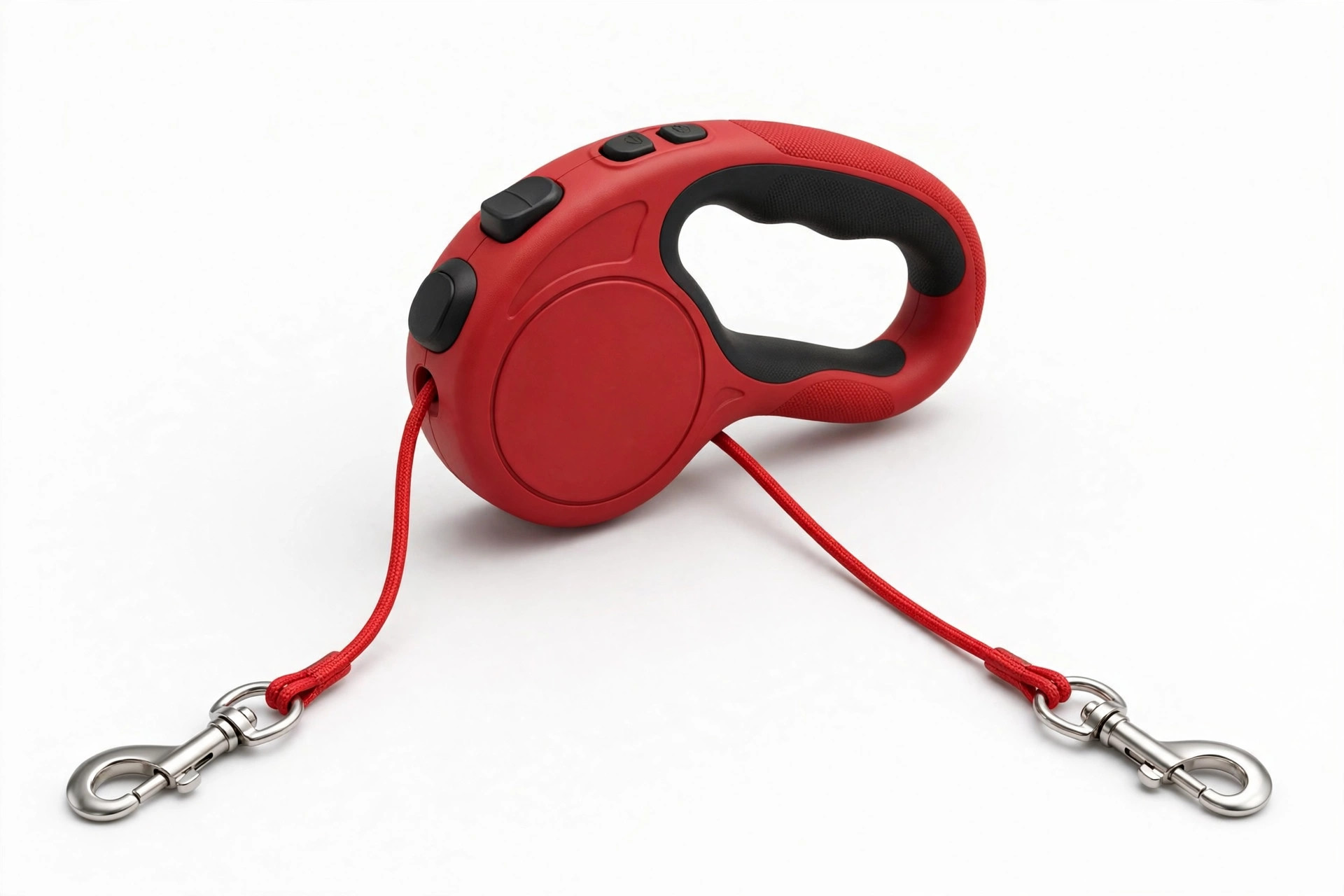
Some dual-lead systems provide independent controls for each dog. The MOVRA Twin Walk Dual Retractable Leash has two retractable leads extending up to 9.8 ft (3 m) each, with an independent brake for each lead, a 360 degree swivel, a built-in flashlight, waste bag storage, and reflective leads. As with any equipment, learn how it works before relying on it outdoors, and check that it suits your dogs and your walking environment.
Retractable leads require attention because slack and distance can change quickly. Use a setup you can manage, follow the product instructions, and avoid allowing either dog to approach people or animals without control. No piece of gear replaces training, awareness, and a secure grip.
What to bring on a double walk
Pack for the route and conditions rather than carrying everything you own. Keep essentials where you can reach them without releasing the leads. Before leaving, check that you have enough supplies for both dogs.
- Waste bags for both dogs
- Treats that each dog can eat and enjoy
- Water and a bowl when the weather or route calls for them
- A light or reflective gear when visibility is low
- A phone and any essentials your dogs need
If one dog needs medication, a special harness, or another specific item, make a simple checklist and keep it with the walking gear. In warm or cold conditions, follow your vet's advice and adjust the route or timing to suit your dogs.
Common double-walking mistakes to avoid
A common mistake is expecting dogs to learn the routine while you immediately take them onto a busy route. Practise in a quieter setting first. Another is walking at the pace of the faster dog when the other needs more time. A slower walk or a separate outing can be a better choice.
Avoid letting the leads become so long that the dogs can cross, wrap around you, or reach something before you can respond. Also avoid tightening the leads continuously or correcting both dogs for one dog's behaviour. Give each dog clear, calm guidance.
Finally, do not treat every outing as a training test. Some days are better suited to a short toilet break, a solo walk, or an indoor activity. Adjusting the plan is part of caring for two dogs with individual needs.
When to ask a trainer or vet
If either dog lunges, growls, snaps, panics, or is difficult to control around people, dogs, traffic, or other triggers, avoid situations where you cannot create space. A qualified, reward-based trainer can observe your setup and suggest a plan that fits your dogs. Look for someone who will work with both dogs' needs rather than promising a quick fix.
Talk with your vet if walking brings on limping, unusual fatigue, breathing difficulty, or a change in behaviour. Pain or other health concerns can affect how a dog moves and responds. Seek guidance before increasing exercise or changing the routine when you have a health concern.
Frequently asked questions
Can one person walk two dogs at once?
Often, yes, if both dogs are manageable on lead and you can keep a secure hold while responding to each one. Practise with each dog separately, start on a quiet route, and choose another arrangement if either dog is too strong or reactive for you to handle safely.
How do you walk two dogs that pull?
Work on loose-lead skills with each dog individually before combining walks. Reward slack leads and attention, practise in low-distraction places, and shorten the paired walk to a level you can manage. A qualified trainer can help create a plan if pulling continues or feels unsafe.
Should I walk two dogs on one leash?
A coupler or dual-lead handle can be convenient, but it is not right for every pair. Separate leads can give you more individual control, while a shared setup may keep the leads together. Consider how your dogs move, whether they pull, and what you can hold securely.
Which dog should walk closest to me?
Choose positions that suit your dogs and your route. You may prefer the dog who needs more guidance closer to you, or place a calmer dog on the side with more passing activity. Practise the positions and change them if the surroundings make another arrangement easier to manage.
What if my dogs keep crossing in front of me?
Pause in a safe place, untangle the leads, and guide each dog back to the side you have chosen. Practise side positions separately and reward the dogs for returning to them. If crossings continue, try a quieter route or separate walks while you build the skill.
Is it better to walk my dogs separately?
Sometimes. Separate walks can suit dogs with different exercise needs, different walking speeds, or behaviour that is difficult to manage together. You can still practise short paired walks when conditions are right and give each dog individual time when that works better.