Gear guides
Dual dog leash buying guide: what actually matters
Independent brakes, a proper swivel, the right lead length. Here is how to choose a double leash that makes walking two dogs easier, not harder.
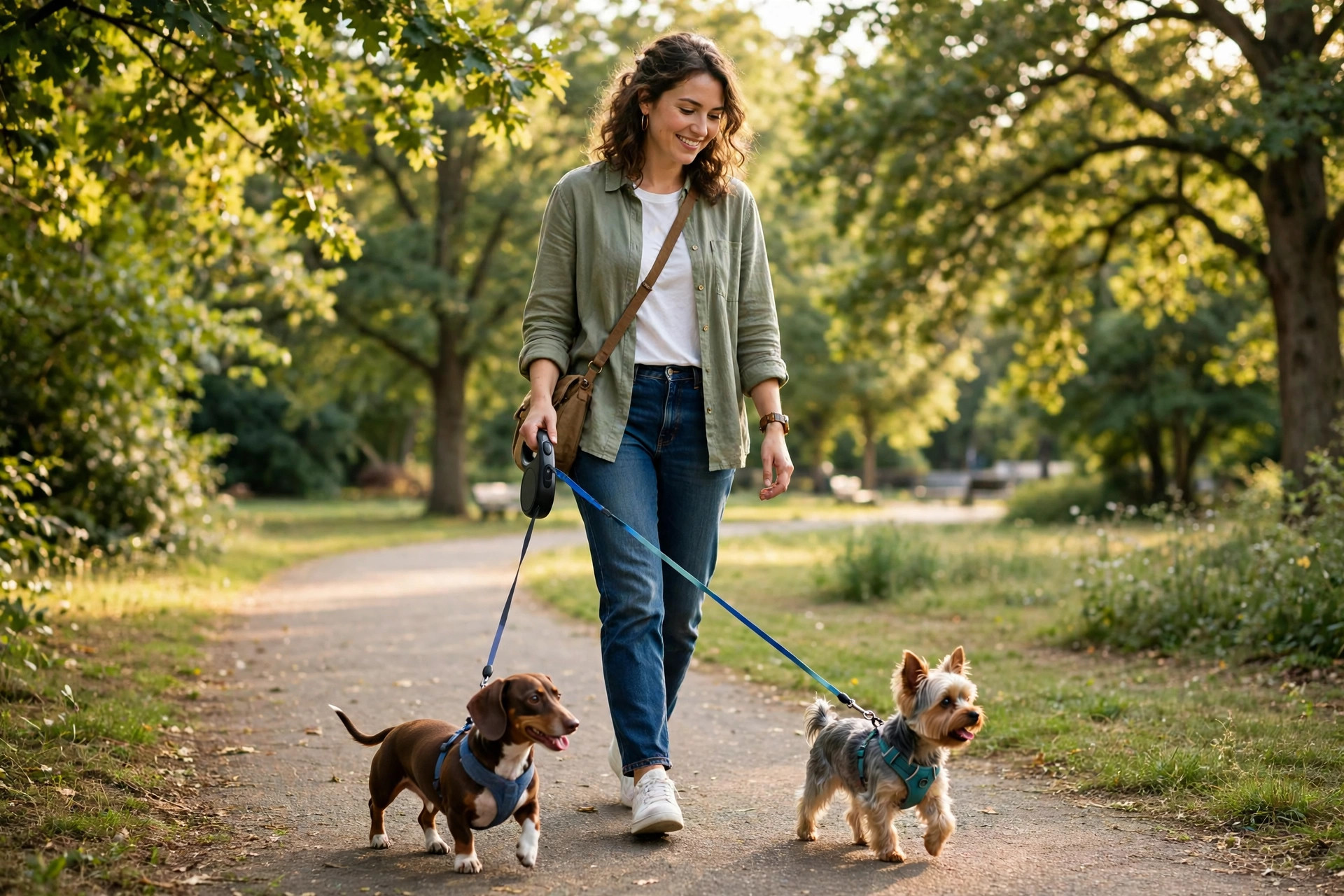
Walking two dogs can turn a pleasant outing into a small exercise in logistics. One dog pauses to sniff, the other moves on, and two separate leads can twist around each other or your hands. A double dog leash brings both leads to one handle, which can make everyday walks simpler when the dogs are a suitable match and the leash fits the way you walk.
The right design is about more than convenience. Separate controls, a rotating connection, useful lead length and a comfortable handle all affect how easily you can respond to two dogs at once. This guide explains what to look for in a dual dog leash, when a retractable design may suit your routine, and when two separate leads are the better choice.
Key takeaways
- Choose independent controls so you can manage each lead separately.
- A 360 degree swivel can help the leads rotate when dogs change sides, but it does not replace attentive handling.
- Use a shorter locked length near roads, in crowds and at doorways, and reserve extra lead length for suitable open spaces.
- A dual leash works best when both dogs can walk calmly and their size, pace and needs are reasonably compatible.
- Compare grip, clips, visibility, storage and care as well as the headline features.
Who a dual dog leash is for
A dual dog leash is designed to let one person walk two dogs from a single handle. It can be a practical option for dogs that are familiar with one another, have reasonably compatible walking styles and already have some lead manners. Owners of two small dogs often look for the best leash for walking two small dogs because one handle can be easier to carry than two, particularly on familiar routes.
Compatibility matters more than the number of dogs. Consider whether both dogs move at a similar pace, respond to your cues and can pass everyday distractions without pulling hard in opposite directions. If one dog needs to stop frequently, is much stronger, or reacts to dogs, bikes or traffic, a shared handle may make it harder to respond thoughtfully.
Two separate leads give you more flexibility to position each dog and can be easier to manage during training. A dual leash is not a shortcut around teaching loose-lead walking. If either dog is unsettled or still learning, practise separately and ask a qualified trainer for help if you need support building calm walking skills.
Independent brakes and controls
Independent controls are among the most useful features to compare when choosing a double dog leash. With one control for each lead, you can pause one dog while allowing the other a little room. A shared brake that stops both leads together can be awkward when only one dog needs to slow down.
Check that each control is easy to identify and reach while you hold the handle naturally. Buttons placed close together can be confusing until you are familiar with them, so practise using the controls at home or in a quiet area before relying on them on a busy walk. If you often wear gloves, check that you can still find and press each button comfortably.
Retractable leads typically have a locking function that limits how far a dog can move from you. Learn how the lock and release work before walking both dogs, and use the shortest practical length near hazards. Avoid allowing a dog to build speed at the end of a lead, since a sudden stop can be uncomfortable and difficult to manage.
- Separate controls for each lead
- Buttons you can identify by feel
- A locking action that is clear and easy to practise
- A comfortable grip that lets you operate the controls without fumbling
How a swivel helps reduce tangles
Dogs do not always walk in a straight line. They may change sides to sniff, circle around one another or pause at different points. A rotating connection where the leads meet the handle lets the leads turn as the dogs move, which can reduce twisting and make a tangle free dual leash easier to manage.
A 360 degree swivel is designed to rotate in any direction. It can help when dogs cross paths, but it cannot prevent every tangle. The dogs may still wrap leads around each other, your legs or nearby objects, especially when there is too much slack or they are allowed to circle freely. Keep watching their movement and pause to untangle safely when needed.
When comparing designs, look at where the swivel sits and whether the leads can turn without catching against the handle. A swivel should feel like a practical part of the setup, not a reason to stop paying attention. Keep the dogs on their usual sides when that works for them, and guide them back calmly if they begin weaving.
Choosing a useful lead length
Lead length affects how much room each dog has and how quickly you can bring them close. Longer extension can be useful for sniffing and exploring in an open area, while a shorter setting is usually easier to manage on a pavement, in a queue or when passing other people and dogs. Think about your usual routes rather than choosing by maximum length alone.
A retractable leash for two dogs needs active handling. Before entering a busy area, shorten and lock both leads so neither dog can step into a cyclist's path, approach another dog unexpectedly or move towards a road. Keep a secure grip and leave enough room to respond without letting the leads trail or loop around people.
Some designs provide separate lead lengths, allowing one dog to have a little more room while the other stays close. That flexibility can help on a quiet route, but it also means you need to track both dogs' positions. Use a consistent routine for changing length, and avoid giving extra extension where you cannot see the dogs or the path ahead.
Retractable or fixed leads for two dogs
A retractable double dog leash offers adjustable length from a shared handle. That can suit open, familiar spaces where you want to give each dog more opportunity to sniff while keeping both connected to you. The trade-off is that you must manage two moving leads and change their length as the surroundings change.
Fixed-length leads can feel more predictable in busy places because the dogs remain closer to you. Two separate fixed leads also make it easier to walk dogs at different paces or give each dog a different position. There is no one best option for every household. Consider your dogs' habits, your routes and how confident you feel handling the equipment.
If you are unsure whether a retractable leash is right for your pair, begin in a quiet, enclosed area and practise locking and shortening the leads. Do not use added length as a substitute for recall, supervision or a safe environment. Follow the product instructions and choose a setup you can manage without distraction.
Visibility for early and evening walks
In low light, it helps to make both the dogs and their leads easier to notice. Reflective lead material can catch light from vehicles or bicycles, while a built-in flashlight can help you see the path immediately ahead. These features are useful additions, but they do not replace choosing a well-lit route and staying alert to your surroundings.
A flashlight attached to the handle may be convenient when your hands are occupied, particularly if you need to check the ground or find something your dog has dropped. Consider whether the light points where you need it while you hold the leash normally. You may still want a separate light for seeing farther ahead or making yourself visible.
Reflective leads are most helpful when light reaches them, so keep them clean and check their condition as part of ordinary care. If you regularly walk after dark, think about visibility for your clothing and dogs as well as the leash. Choose routes where you can see approaching hazards and give other path users room.
Handle comfort and everyday extras
A leash handle can feel different after a full walk than it does in a quick shop inspection. Look for a grip that sits comfortably in your hand and leaves you able to operate each control. The handle dimensions may also affect storage and portability, so check them against your hand size and the space in your bag or car.
Small practical features can make a routine easier. Waste bag storage in the handle means bags are close at hand, while metal clips provide a familiar attachment point for collars or harnesses. Check that each clip closes properly and that the leash attaches securely before setting out.
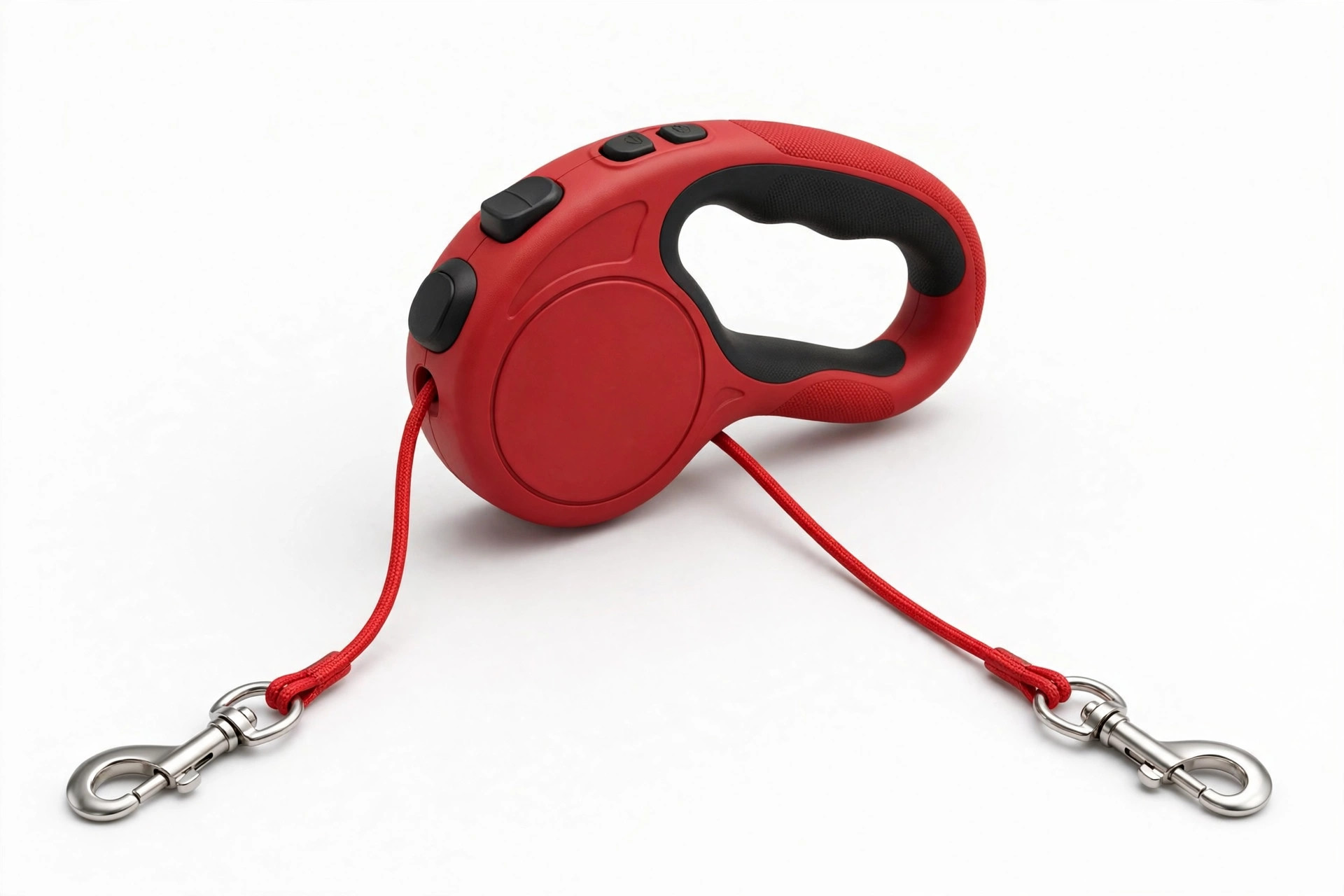
The MOVRA Twin Walk Dual Retractable Leash has two leads that extend to 9.8 ft (3 m), an independent brake button for each lead, a 360 degree swivel, a built-in flashlight and waste bag storage in the handle. It also has reflective leads, two metal carabiner clips and a handle measuring 10.24 x 7.1 in, and is available in red and navy. Consider whether those features suit your everyday routes and how the handle feels to you.
- A grip that is comfortable for your hand
- Controls that are easy to tell apart
- Clips that attach securely to suitable walking equipment
- Storage for waste bags if you find it useful
- Visibility features that match your walking routine
Preparing for your first walks
Let both dogs investigate the new leash while it is not being used for a walk, and reward calm behaviour if treats are part of your routine. Attach each clip to the intended collar or harness and check the connections. Practise the independent controls with the dogs beside you, so you know how to shorten and lock each lead before you are managing movement outdoors.
For the first outings, choose a quiet, familiar route and keep the leads short enough to guide both dogs comfortably. Give each dog a consistent side if that helps them settle, and pause when they cross or become tangled. Use calm cues and rewards that suit each dog. Keep the walk short enough that you can focus on learning the equipment.
Check the leash, leads and clips regularly for visible wear, dirt or damage, and follow the care instructions supplied with the product. Stop using equipment that appears damaged until you have resolved the issue. Store the handle where it will not be chewed or accidentally activated by a curious pet.
Comparison checklist
Before choosing a leash for two dogs, compare how it fits your dogs and your daily routine. Use this short checklist to focus on practical differences rather than features you may rarely use.
- Can each lead be controlled independently?
- Can you find and operate the controls while holding the handle naturally?
- Does a swivel allow the leads to rotate as the dogs move?
- Can you shorten and secure both leads for busy areas?
- Are the grip, handle size and clips comfortable and suitable for you?
- Would reflective material, a flashlight or bag storage be useful on your routes?
- Can you manage both dogs calmly with this setup, or would separate leads be more practical?
Frequently asked questions
Is a dual dog leash suitable for every pair of dogs?
No. It is most practical when both dogs can walk calmly and their pace and needs are reasonably compatible. Dogs that pull strongly, react to triggers or need different training approaches may be easier to manage on separate leads.
Does a tangle free dual leash prevent all tangles?
No. A swivel can let the leads rotate and may reduce twisting, but dogs can still cross, circle or wrap leads around objects. Supervise both dogs and pause to untangle when necessary.
Is a retractable leash for two dogs a good choice near roads?
Retractable leads need careful length control. Shorten and lock both leads before roads, crossings and crowded areas, and keep the dogs close enough for you to guide them safely. If you cannot manage both dogs that way, choose a setup you can control more easily.
What should I look for in the best leash for walking two small dogs?
Start with the dogs' behaviour and your usual walking environment. Look for separate controls, a comfortable handle, secure clips and a way to keep both leads short when needed. The best choice is one you can use confidently with your particular dogs.
Can I use one dual leash while training a dog to walk on lead?
It may be more difficult to focus on training when you are also managing another dog. Practise new skills with one dog at a time, and combine walks when you can handle both comfortably. A qualified trainer can help if walking remains challenging.
How much lead length should I use?
Use only as much length as the surroundings and your handling allow. More room may suit a suitable open space, while shorter leads are easier to manage near people, roads and entrances. Follow the leash instructions and supervise both dogs throughout the walk.