Seasonal
Dog walking at night: how to stay safe and visible
As the days get shorter, a few simple choices help you and your dog be seen and stay comfortable on evening walks.
When daylight fades early, the usual dog walk can feel different. Passing traffic is harder to judge, familiar paths look less familiar, and small hazards can disappear into shadow. A few thoughtful habits can make dog walking at night calmer and easier for both of you.
Visibility is only one part of the picture. Route choice, lead control, your dog's comfort, and a plan for getting home all matter too. These practical night dog walking safety tips can help you prepare, whether you are taking a quick pavement loop or a longer evening outing.
Key takeaways
- Use reflective details and an active light so you can be seen and see your surroundings.
- Choose familiar routes and adjust them for traffic, weather, and your dog's confidence.
- Keep your dog close near roads, junctions, cyclists, and other situations with limited visibility.
- Check paws and coat after wet or icy walks, and contact your vet if you notice a concerning change.
Be seen: reflective and lit
Reflective materials return light when a beam, such as a car's headlights, reaches them. They can be useful on a lead, collar, harness, coat, or your own clothing, but they do not shine by themselves. Add an active light, such as a clip-on lamp or flashlight, so you are easier to notice from more directions.
For your dog, choose a secure collar or harness with reflective details and attach a light where it will not be hidden by long fur or a coat. Check that the attachment stays in place when your dog turns, sniffs, or shakes. For yourself, a reflective outer layer or band can help make your outline more noticeable.
- Reflective lead, collar, harness, or coat for your dog
- Reflective detail on your own outer layer
- A clip-on light positioned where it can be seen
- A handheld or leash-mounted flashlight for the path
See the path, not just the road
Streetlights do not reach every pavement, verge, or shared path evenly. A flashlight helps you notice broken paving, steps, puddles, branches, and objects your dog might investigate. It also makes it easier to see what is underfoot when rain or fallen leaves cover the ground.
Aim the beam slightly ahead and down rather than directly into people's faces. Keep a hand available to manage the lead, and take a moment to slow down when the path narrows or changes surface. If your light is attached to a lead, make sure it illuminates the ground without making the lead difficult to handle.
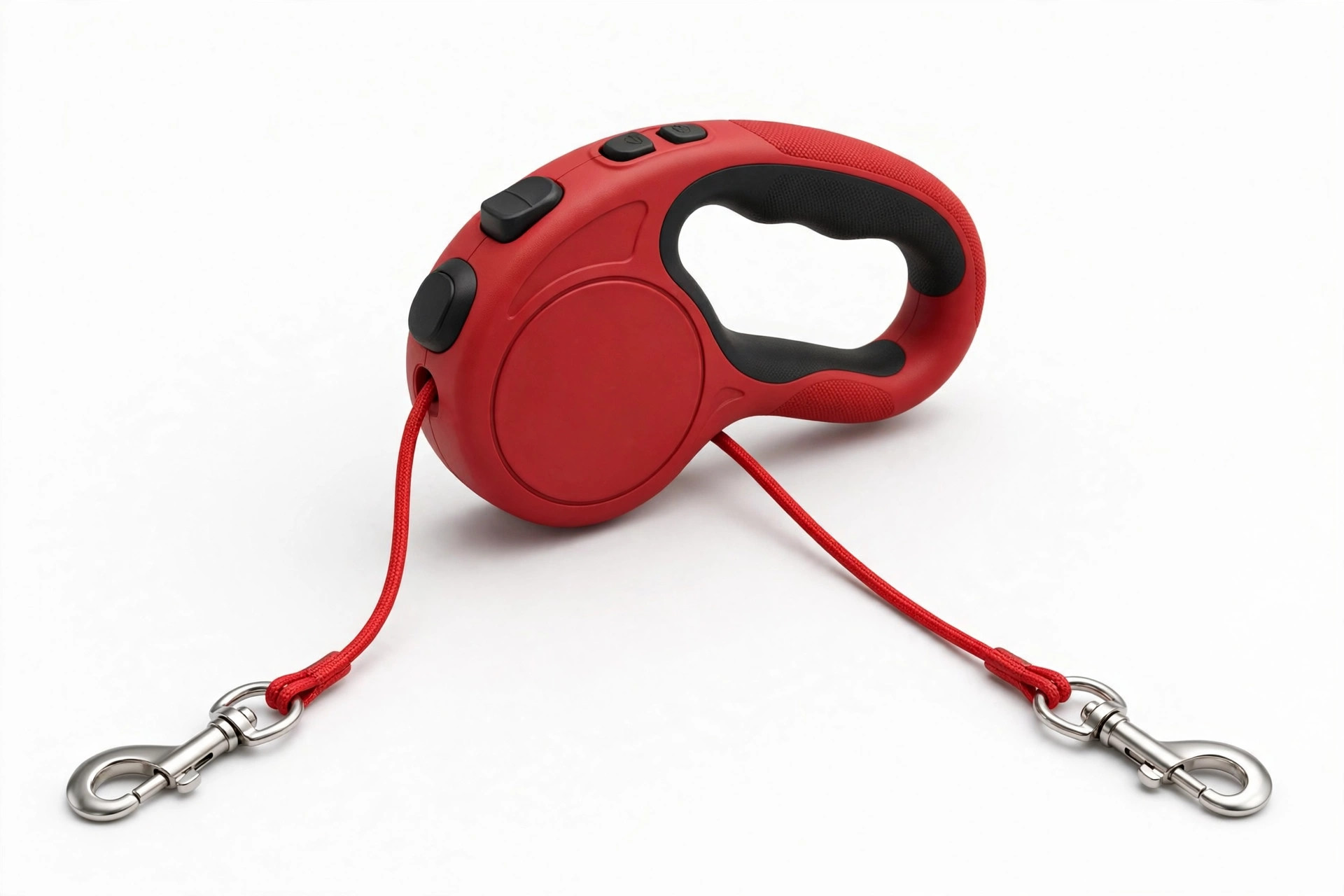
A built-in flashlight can be convenient when it is part of your walking equipment. The MOVRA Twin Walk Dual Retractable Leash has a built-in flashlight, reflective leads, independent brakes, leads that extend to 9.8 ft (3 m) and can be locked short, and waste bag storage. Whatever equipment you use, check that you can operate it comfortably before relying on it during a walk.
Choose a route that suits the conditions
A route that feels simple in daylight may be confusing after dark. Start with familiar streets or paths where you know the crossings, surfaces, and places to step aside. If lighting is patchy, the pavement is narrow, or traffic moves quickly, consider a shorter alternative instead of trying to complete your usual loop.
Think about who else uses the route. Shared paths may bring cyclists or runners into view suddenly, while busy roads can make it hard to hear approaching traffic. A well-lit area is not automatically a good choice if it has limited space or poor sightlines. Look for a route where you can see and be seen, with room to pause safely.
If you are trying somewhere new, explore it in daylight first when possible. Notice entrances, exits, crossings, and places where you can turn back. Tell someone your intended route if you are walking alone, and take a charged phone. Keep it accessible rather than buried at the bottom of a bag.
The best way to walk a dog in the dark is the one that matches your dog's needs and the conditions outside. Some evenings call for a shorter familiar walk, followed by indoor play or training. A shorter outing can still provide time to sniff and move at a comfortable pace.
Keep leads under control near roads
At night, distance can be difficult to judge, and a dog may be harder for a driver or cyclist to spot than the person holding the lead. Keep your dog close near roads, crossings, driveways, and narrow sections of pavement. Avoid letting the lead trail or stretch across a route other people need to use.
If you use a retractable lead, lock it short before reaching a road or crowded area. Letting it out can be appropriate in a suitable open space, but only when you can see the surroundings and maintain control. Independent brakes, where available, can make it easier to manage two leads separately, but practise using the controls somewhere calm first.
At a kerb, pause before stepping forward. Ask your dog to wait if that is a familiar cue, check the road in both directions, and cross together when it is clear. Do not assume a quiet road is empty just because you cannot hear a vehicle; low visibility can make approaching traffic harder to notice.
Give other walkers and dogs space. If you need to stop, move to a place where you are not blocking the pavement, then shorten the lead while people pass. These small routines keep the walk predictable and can help reduce sudden tangles in low light.
Help a nervous dog feel secure in the dark
Some dogs become uncertain when familiar surroundings look different at night. Deep shadows, reflections in windows, rustling hedges, and distant sounds can all seem more noticeable. Watch your dog's body language rather than assuming that reluctance is stubbornness. A dog that freezes, pulls to go home, or repeatedly scans the surroundings may need more space or a simpler route.
Keep the first evening walks brief and familiar. Let your dog sniff at a comfortable pace, and reward calm attention if that is part of your usual training. Avoid pulling a worried dog towards something they are trying to avoid. Instead, create distance, pause somewhere safe, or turn back and try again another day.
A steady routine can help: use the same door, familiar walking equipment, and a route your dog knows. Keep your voice relaxed and your lead secure without holding constant tension. If your dog is comfortable in a well-lit, quieter area, build from there gradually rather than increasing the length and difficulty of the walk at once.
If a new fear appears suddenly, becomes stronger, or affects your dog's willingness to go outside, consider discussing it with your vet. Pain or a change in sight or hearing can affect how a dog responds to darkness. A vet can help you decide whether a health check or other support is appropriate.
Wildlife and off-lead risks at dusk
Dusk can bring more activity from wildlife, and low light makes it harder to see what is ahead. A dog that normally responds well to recall may be distracted by a sound or scent before you notice what caught their attention. Keep your dog on a lead where visibility is limited, near wildlife, or wherever local rules require it.
Before giving a dog space to move freely, think about whether the area is enclosed, whether you can see the ground and other path users, and whether your dog will return promptly when called. If any of those points are uncertain, choose a longer lead in a suitable open area or keep the lead short. Do not rely on a small light to make a distant off-lead dog easy to track.
If your dog spots an animal, avoid running after them or shouting in a way that could make the situation more exciting. Call them back using a familiar cue and move away from the distraction when you can. Practise recall in safer, well-lit conditions rather than expecting it to work reliably for the first time after dark.
Check local rules for parks, paths, and outdoor spaces before walking. Rules can vary by place, and some areas may have particular restrictions or seasonal considerations. When in doubt, keep your dog close and choose a route where you can see enough to make safe decisions.
Winter dog walking safety: ice, grit, and paw care
Cold-weather walks bring their own challenges. Ice can make paths slippery for both of you, while wet leaves, slush, and puddles can hide uneven ground. Choose a route with a surface you can assess, slow down when conditions are uncertain, and avoid rushing across a patch that looks icy. If your footing feels unstable, turn back or use a safer route.
Road salt and grit may irritate paws, and dogs can lick residue from their feet after a walk. When you get home, wipe or rinse your dog's paws if they have been on treated surfaces, then dry them gently. Check between the toes for grit, small stones, ice, or redness. Take care with any product or treatment applied to paws, and ask your vet for advice if you are unsure what is suitable for your dog.
A coat may help some dogs stay comfortable in cold, wet weather, particularly those with short coats or those that are small, older, or sensitive to the cold. Fit matters: the coat should allow your dog to walk naturally and should not cover reflective details or get caught on equipment. Keep an eye on your dog throughout the walk and shorten the outing if they seem uncomfortable.
Dry your dog when you return, especially if their coat is wet. If you notice a persistent limp, sore paws, or a reaction to something on the ground, contact your vet. Winter dog walking safety is about adapting to the conditions, not pushing through a route simply because it is familiar.
Adjust your walk for city or rural surroundings
In a city, pay particular attention to driveways, parked cars, bus stops, cycle lanes, and people coming around corners. Parked vehicles can block your view of traffic, and a dog may step into a gap before you can see what is approaching. Keep the lead short around crossings and give cyclists and pedestrians room to pass.
In a rural area, there may be less street lighting, fewer people nearby, and longer stretches without an easy place to turn. Carry a reliable light, stay on routes you know, and let someone know where you are going. Be alert around roads without pavements, gates, livestock, and areas where wildlife may be active. Check local guidance before entering fields or other managed land.
Do not assume that a route is safe because it is quiet. In either setting, consider the surface, visibility, escape options, and your dog's response to the surroundings. If the route feels difficult to manage, choose a shorter or better-lit alternative. The right choice can change from one evening to the next as weather, traffic, and light change.
Plan ahead when walking alone
A little planning can make a solo walk feel more manageable. Tell someone where you plan to walk and when you expect to be back, especially if your route is quiet or outside a built-up area. Keep your phone charged and easy to reach, and avoid distractions that prevent you from noticing traffic, other path users, or your dog.
Choose a route with visible access points and a straightforward way home. If the conditions worsen, your light stops working, or you feel uncomfortable, shorten the walk and return by a familiar route. You do not need to complete the planned distance when the circumstances have changed.
Carry what you need without overloading your hands. Waste bag storage in a leash can keep bags close at hand; otherwise, put them somewhere easy to reach. Keep a spare light or another practical backup if you expect to be out for longer. Before setting off, check the lead, clips, and your dog's collar or harness for a secure fit.
A practical night walk checklist
A simple routine helps you leave prepared without turning every walk into a project. Adjust this list to your route, the weather, and your dog's needs. If something important is missing, a short familiar walk may be a better choice than heading out on a longer, less predictable route.
- Check that your dog's collar or harness fits securely and reflective details are visible
- Switch on active lights and check that your flashlight works
- Choose a familiar route with a surface you can see
- Lock the lead short before roads, crossings, and narrow paths
- Pack waste bags and keep your phone accessible
- After a cold or wet walk, check and gently dry your dog's paws
A safer evening walk starts with a route you can manage, gear you know how to use, and the flexibility to turn back.
Frequently asked questions
How do I make my dog visible at night?
Combine reflective details with an active light. Put reflective gear on your dog's collar, harness, or lead, and position a clip-on light where it can be seen. Reflective material depends on an incoming light source, so a flashlight or other active light can add visibility from more directions. Check the fit and attachments before each walk.
What is the best way to walk a dog in the dark?
Choose a familiar route with a surface you can see, carry a light, and keep your dog close near roads and other people. Match the length and difficulty of the walk to your dog's confidence and the weather. If visibility is poor or your dog seems unsettled, take a shorter route or turn back.
Should I use a retractable lead on a night walk?
A retractable lead may suit an appropriate open space when you can see the surroundings and manage the lead. Lock it short near roads, crossings, and busy or narrow paths. Practise using its controls in a calm setting, and do not let the lead stretch where other people or dogs could become tangled.
How can I help my dog that is afraid of the dark?
Start with short walks on familiar, well-lit routes and give your dog time to look and sniff without being pulled towards something worrying. Keep the lead secure and move away from things that cause concern. If the fear is new, persistent, or getting worse, ask your vet whether a check-up or further support would help.
What should I check after a winter evening walk?
Dry your dog and look over their paws, including between the toes, for grit, ice, redness, or soreness. Wipe or rinse paws after walking on treated surfaces if appropriate, and check the rest of the coat for wetness or debris. Contact your vet if you notice a persistent limp or another concerning change.
Are night walks safe in rural areas?
A rural walk can be suitable when you can see the path, manage your dog, and get back safely, but darkness may make hazards and other animals harder to spot. Carry a light, stay on familiar routes, keep your dog close where visibility is limited, and check local rules. Choose a shorter or better-lit option if conditions do not feel manageable.